
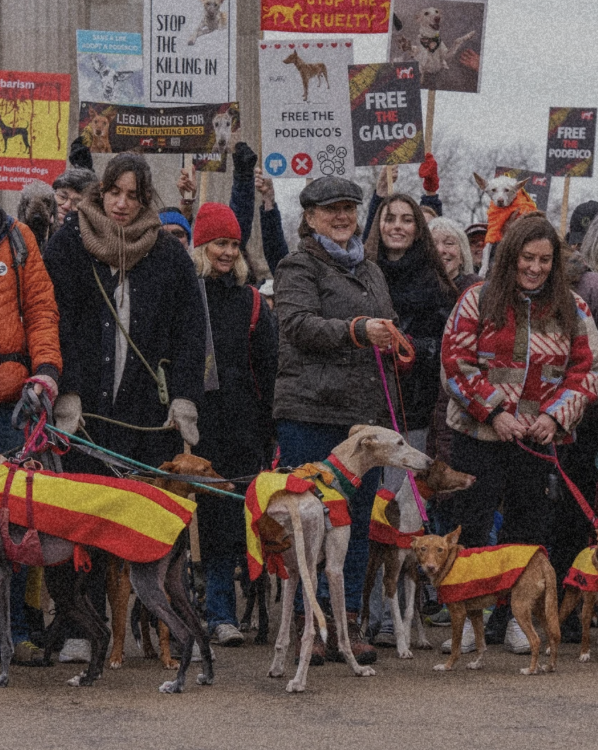
Why we march
What are galgos and podencos?
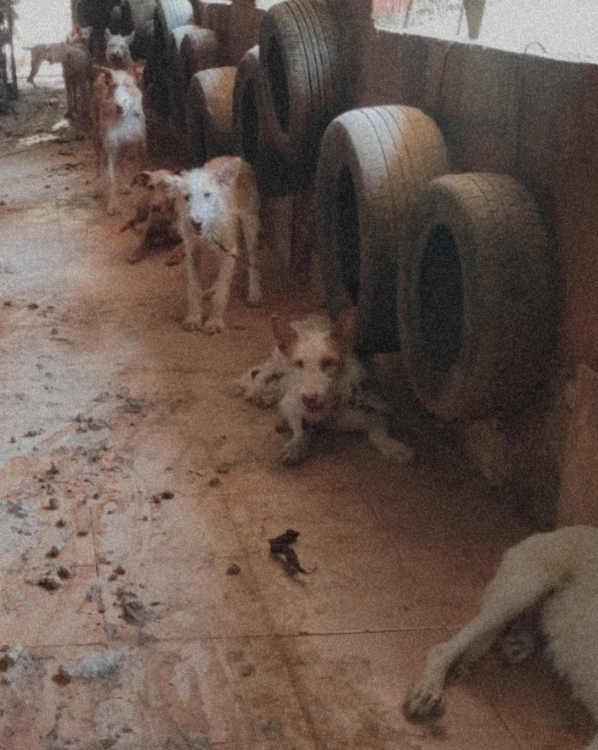
Galgos and Podencos are sighthounds prized for their speed and endurance in hunting. Breeding is completely unregulated, with an estimated 500,000 dogs bred annually for the hunting industry. These dogs are typically kept in appalling conditions: chained in dark sheds, caves, or bunkers without adequate food, veterinary care, or human contact. Hunters view them as disposable tools rather than companions.
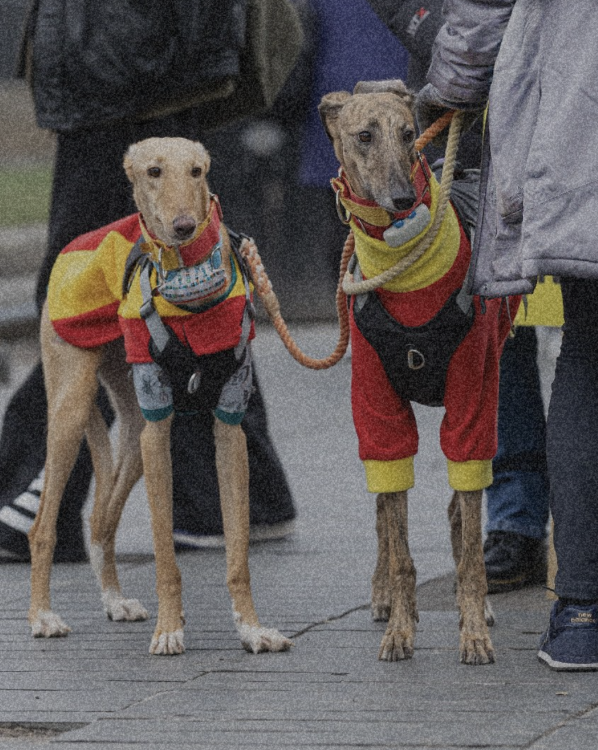
Spain has one of Europe's largest hunting industries, with nearly one million licensed hunters. Around 85% of Spain’s land is dedicated hunting land and the hunting sector generates an estimated €3.6 billion annually. Hunting season runs from October to February, during which Galgos (Spanish greyhounds) and Podencos are used for hare hunting in open fields, a traditional practice that remains legal only in Spain and Portugal within the EU.
Is hunting big in Spain?
In March 2023, Spain passed its first comprehensive national animal welfare law (Law 7/2023), which came into force in September 2023. The law introduced significant protections for pets, including mandatory microchipping, civil liability insurance for dogs, breeding restrictions, and penalties of up to €200,000 for animal abuse. However, following intense political pressure from Spain's powerful hunting lobby and the Royal Spanish Hunting Federation, the government excluded hunting dogs from all protections. Galgos and Podencos have no legal protection against cruelty, abandonment, or killing. They remain classified as "working tools" rather than sentient beings.
Does Spain have animal welfare laws?
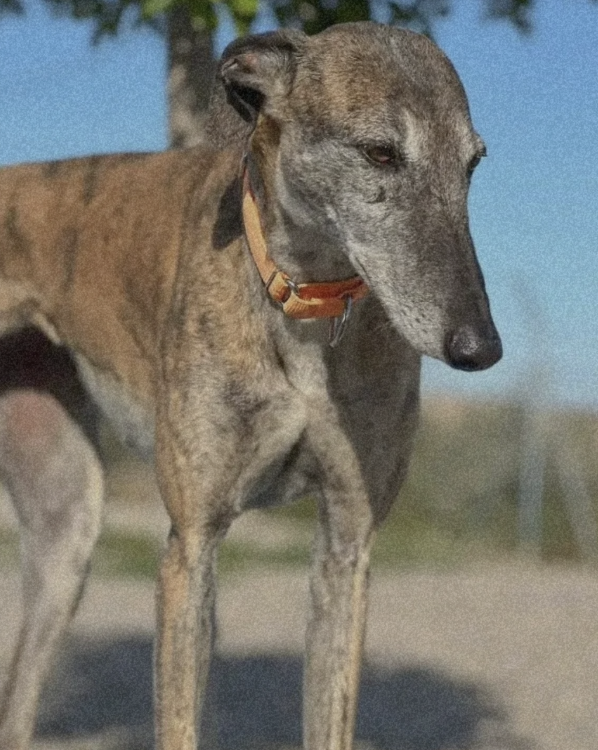
An estimated 60,000 to 100,000 dogs are discarded, abandoned, tortured, or killed each year when the hunting season ends in February. Many are young dogs under two years of age, and some are pregnant or nursing. Dogs deemed unsuitable, too slow, injured, or simply no longer needed, are brutally disposed of through hanging, burning, drowning, poisoning, or being thrown down wells or off cliffs.
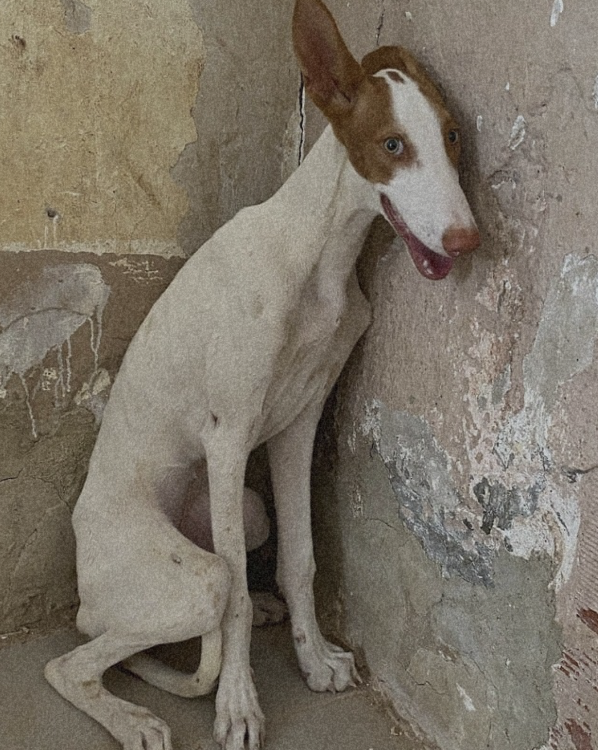
What happens to these dogs after the hunting season?
Why do we march in the UK?
We march because:
International Pressure Works: The Spanish government has proven more responsive to international criticism than domestic advocacy alone.
Adoption Networks: Many UK families have adopted rescued Galgos and Podencos, experiencing firsthand their gentle, affectionate nature, a stark contrast to how they're treated in Spain.
Visibility: By marching at prominent locations in key cities, we bring nationwide attention to their suffering.
Solidarity: We stand with Spanish animal welfare advocates who face harassment and threats for their work, demanding that all dogs receive the legal protections they deserve.
Our goal is clear: to pressure the Spanish government to include hunting dogs in animal welfare laws and ultimately end the brutal practice of hunting with dogs in Spain.
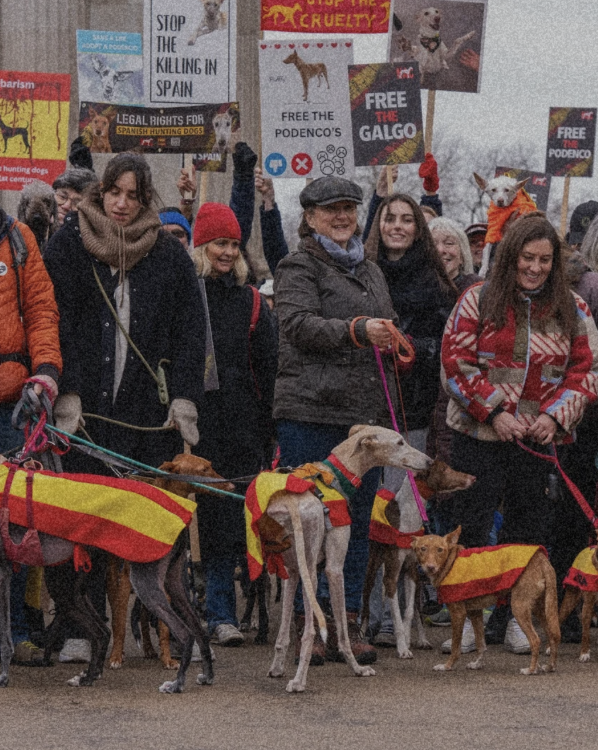
Yes. Numerous Spanish shelters and rescue organisations like Galgos del Sol and SOS Galgos work tirelessly to save, rehabilitate, and rehome Galgos and Podencos. Spanish advocacy groups like Plataforma NAC organise peaceful demonstrations each February, demanding an end to hunting with dogs and calling for these breeds to be included in animal welfare legislation. However, they face significant challenges from the politically and economically powerful hunting lobby and deep-rooted cultural traditions.
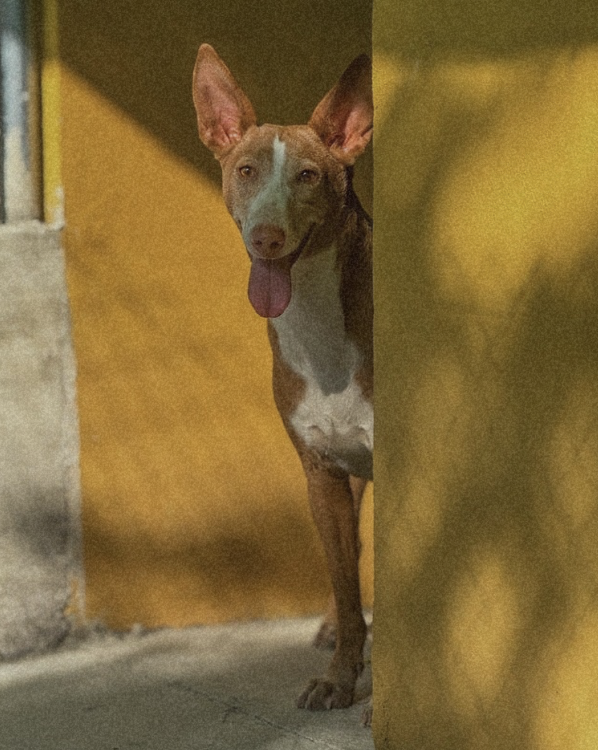
Are people in Spain fighting for these dogs?
Same dogs. Same rights.
We support Mismos Perros, Mismos Derechos, a campaign fighting for equal protection for all dogs in Spain